
NEWS

Thirteen Canadian Cannabis Influencers Worth Following on Twitter
With the greener seasons rolling in, we thought it was high time we showcased 13 cannabis industry influencers.
Lisa Campbell
Over the years, Lisa Campbell became a true cannabis expert by working extensively in international drug policy with Canadian Students for Sensible Drug Policy. As the founder of the Women Grow Toronto chapter, Lisa is now founding a cannabis subsidiary for Lifford Wine & Spirits, helping cannabis companies navigate the emerging cannabis industry across Canada and beyond. Lifford Cannabis Solutions will work with cannabis companies to help their brands come to market across all ten provinces, leveraging Lifford’s national salesforce and longstanding relationships.
With the greener seasons rolling in, we thought it was high time we showcased 13 cannabis industry influencers.
Lisa Campbell
Over the years, Lisa Campbell became a true cannabis expert by working extensively in international drug policy with Canadian Students for Sensible Drug Policy. As the founder of the Women Grow Toronto chapter, Lisa is now founding a cannabis subsidiary for Lifford Wine & Spirits, helping cannabis companies navigate the emerging cannabis industry across Canada and beyond. Lifford Cannabis Solutions will work with cannabis companies to help their brands come to market across all ten provinces, leveraging Lifford’s national salesforce and longstanding relationships.

How will Manitobans buy their pot? That depends on what you want in your weed
From wine to weed
We're still waiting to see who will take the lead as educators in this new market, but some in the wine industry say they are up to the task.
That means Manitoba could soon be home to not just wine reps but a number of cannabis reps.
"We have a lot of experience handling controlled substances and dealing with liquor boards across all 10 provinces," said Lisa Campbell, cannabis portfolio specialist for Lifford Cannabis Solutions, a subsidiary company of Toronto-based Lifford Wine and Spirits.
"Now that cannabis is being regulated similar to alcohol, there are a lot of parallels in terms of the supply chain and the services that producers will need getting to market."
From wine to weed
We're still waiting to see who will take the lead as educators in this new market, but some in the wine industry say they are up to the task.
That means Manitoba could soon be home to not just wine reps but a number of cannabis reps.
"We have a lot of experience handling controlled substances and dealing with liquor boards across all 10 provinces," said Lisa Campbell, cannabis portfolio specialist for Lifford Cannabis Solutions, a subsidiary company of Toronto-based Lifford Wine and Spirits.
"Now that cannabis is being regulated similar to alcohol, there are a lot of parallels in terms of the supply chain and the services that producers will need getting to market."
All marijuana sold in Manitoba will first go through Manitoba Liquor & Lotteries, but as the number of licensed producers expands and products diversify, Campbell says there will be demand for a cannabis rep service to help link retailers with producers.
"There are so many products that are on the existing grey market which haven't been approved yet by Health Canada so we're really hoping that as we move towards product diversity, especially Year 2 of legalization, that all these products will be available — from dried flower and oils currently to in the future hopefully vape pens, as well as edibles and beverages," said Campbell.

Her Mission: Getting Craft Cannabis Into Ontario’s Government Cannabis Stores
Last October, Constellation Brands Inc.—an international producer and marketer of beer, wine and spirits, and a behemoth in the alcohol industry—signed a $191 million deal for a 9.9% stake in Canopy Growth Corp., Canada’s first publicly traded cannabis company. The unprecedented deal broke new ground and created new possibilities for both industries.
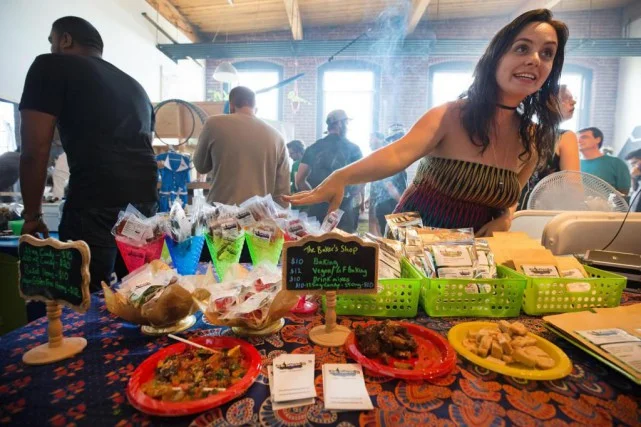
“That deal had a huge ripple effect,” says Lisa Campbell, co-creator of Green Market pop-up events, which are essentially farmers’ markets for craft cannabis producers, and well-attended despite being illegal. “All these alcohol companies are now getting into cannabis in a really big way,” Campbell says. “And all these cannabis companies are trying to get into the alcohol industry because they have massive coffers.”
Last October, Constellation Brands Inc.—an international producer and marketer of beer, wine and spirits, and a behemoth in the alcohol industry—signed a $191 million deal for a 9.9% stake in Canopy Growth Corp., Canada’s first publicly traded cannabis company. The unprecedented deal broke new ground and created new possibilities for both industries.
“That deal had a huge ripple effect,” says Lisa Campbell, co-creator of Green Market pop-up events, which are essentially farmers’ markets for craft cannabis producers, and well-attended despite being illegal. “All these alcohol companies are now getting into cannabis in a really big way,” Campbell says. “And all these cannabis companies are trying to get into the alcohol industry because they have massive coffers.”
Campbell has developed an extensive network of contacts in the cannabis industry through Green Market and her history of advocacy. She also has family connections in the alcohol industry, and for her next move, Campbell’s merging her cannabis advocacy with the family business and going legal.
Campbell’s father, Steve, is the co-founder of Lifford Wine & Spirits, a company that distributes alcohol products that can’t be purchased in Ontario’s government-controlled liquor stores (LCBOs). What started as a small agency now operates across Canada with products sourced from 18 countries. The LCBO will also be in charge of cannabis sales in Ontario, selling products in separate retail locations. Once legalized, Lifford Wine & Spirits will add cannabis to their portfolio.
“I think a lot of the stuff I did with the Green Market is parallel, almost exactly, in terms of acting like an agency,” Campbell says. “Green Market is a portfolio of brands, and some of those brands we would have supply-chain relationships with.”
For Green Market, Campbell sourced craft products and brought them to market through her events and by acquiring shelf space in large dispensary chains. “The advantage of an agency in the supply chain is that agencies are tastemakers,” she says.
Step One: Educate
While Green Market is on hiatus, it may not be finished. “Initially, we thought it was over but now we like to say Green Market is snowbirding,” says Campbell. Her focus at the moment is on the future with Lifford and bringing more cannabis products to market for the emerging legal industry. Now, her business card says something else. Cannabis Portfolio Specialist. A new title for a new opportunity.
On a Thursday morning in March, light spills through large windows on the first floor of the Lifford building. For now, the space is mostly empty, with a few framed photos on the wall, a fold-up table in the middle of the room. Soon, the first floor will be transformed, Campbell says, into a co-working space and a place to hold events, specifically events geared towards cannabis education.
“Through Green Market, I’ve met all these folks, restaurant owners, juice bar owners, creative, talented entrepreneurs, but they don’t have a million dollars to acquire a licensed producer (LP) or build a facility, but they want to do things like edible dinners,” Campbell says.
“These restauranters and chefs and food producers don’t necessarily have the knowledge to enter the industry, so there’s major interest but not any education geared toward them or their community.”
Before Lifford was founded in 1978, Campbell’s father was in the restaurant industry for 16 years. At that time, “it was really difficult to find wine here,” he says. “I really do see the LCBO, and their new role in selling cannabis, they are going to mimic their success in wine and spirits. They will look at the things from the past that have really worked and one of them is greater accessibility beyond what they were selling in stores. I can see, over time, that parallel happening with marijuana, as well.”
The first year of legalization is critical, Campbell says. She is viewing it as a year-long national cannabis cup.
“All the LPs, big or small, are going to have their flowers on the market,” she says. “A lot of consumer tastes and preference will be solidified in that first year.”
Campbell believes, though legalization is coming soon, we are still more than a year away from “peak legalization,” which she says won’t be achieved until there is product diversity. “Once craft cannabis comes on the market, I think you’ll see a really high demand for that small-batch, small-producer product.”
As for how Campbell sees herself fitting into the equation: “If you have a strain that no other LP has but you’re just a tiny micro grow, you might want to team up with another grower and supply them with clones, and a company like ours will be able to take all that product, brand it, and sell it to a retailer.”
The Liquor Precedent
Recently, Lifford did just this with a wine. They brought a Canadian winemaker to Chile, who created a wine, while Lifford created a label and then brokered a deal with Quebec’s provincial liquor stores, who bought every bottle.
“Part of what we’ll be able to do in future, like we do for alcohol now, is take a network of producers that meet defined criteria, and create a brand around their product to sell to a retailer,” Campbell says.
“The LCBO has a huge appetite for products. It’s the biggest alcohol buyer in the world. Soon, it will be the biggest cannabis buyer in the world.”
It’s taken about two years of lobbying to get Lifford to this point of cannabis acceptance, Campbell says. “Two years ago, I wanted to move in and create a cannabis showroom and have a space where LPs could rent out shelf space for their products.”
It wasn’t until December, and a threat to move to Colombia, when the idea really started to gain traction. “We had a managers’ meeting, all the managers across Canada, and they all agreed cannabis was an opportunity,” Campbell says. “If one of our biggest competitors is going to go all in on cannabis, it makes sense we would, too.”
Now, the liquor industry and the cannabis industry are converging coast to coast. It’s a far cry from the days when liquor purchases required background checks, an assessment of past consumption, and the discretion of the clerk to decide whether or not you’re buying too much. Campbell is hoping cannabis will follow a similar path of normalization.
“Alcohol is very much part of politics. When is it going to become acceptable for a public affairs company to take out their client and a politician, not for a beer, but to consume cannabis?
“We’re at the very beginning.”

Badass Lady In Cannabiz Lisa Campbell Talks The Revolution of Cannabis
Canada is creating a multi-billion dollar legal cannabis industry, thanks in large part to community organizers and activists like Lisa Campbell. The industry, which was once considered a wild west, is now being cozied up to by big banksand stock investors. While some old school cannabis patients are angry about the changes, noting that the social justice element are being lost. Companies are cheering for the growth and potential that can be brought to the table for patients. Campbell, sees both perspectives and recently put aside her own work in the industry to join the team at Lifford Wine & Spirits to head up their Cannabis portfolio.
Known for her role in Toronto, Campbell has helped several independent cannabis companies come to the forefront. She’s hoping that she can use that same magic of connection and community at Lifford’s in her role of Cannabis Portfolio Specialist where her mandate will be to work with licensed producersand craft makers to ensure their products get into the LCBO and SAQ. It’s an exciting time for both Campbell and the industry, and we had the chance to talk to Campbell about why cannabis conversations matter and what changes she foresees happening in the world of cannabis. Keep reading for our Q&A:
Canada is creating a multi-billion dollar legal cannabis industry, thanks in large part to community organizers and activists like Lisa Campbell. The industry, which was once considered a wild west, is now being cozied up to by big banksand stock investors. While some old school cannabis patients are angry about the changes, noting that the social justice element are being lost. Companies are cheering for the growth and potential that can be brought to the table for patients. Campbell, sees both perspectives and recently put aside her own work in the industry to join the team at Lifford Wine & Spirits to head up their Cannabis portfolio.
Known for her role in Toronto, Campbell has helped several independent cannabis companies come to the forefront. She’s hoping that she can use that same magic of connection and community at Lifford’s in her role of Cannabis Portfolio Specialist where her mandate will be to work with licensed producersand craft makers to ensure their products get into the LCBO and SAQ. It’s an exciting time for both Campbell and the industry, and we had the chance to talk to Campbell about why cannabis conversations matter and what changes she foresees happening in the world of cannabis. Keep reading for our Q&A:
Edit Seven: What information are you hoping to provide to help push forward craft cannabis?
Lisa Campbell: My goal is to work with existing craft cannabis producers and pair them with the top licensed producers in Canada, so they can make and create products to bring to market over the next year and a half. Right now, we’re seeing cannabis beverages become a growing trend and that’s something we’re looking into. Another thing that has gained acceptance with cannabis consumption spaces in Ontario are vape pens. As the government begins to set up their own retail shops for cannabis, agents can play a role in sourcing diverse products for consumers. While we aren’t sure yet if there will be a consignment program in Ontario, the possibilities are endless.
E7: Cannabis has become one of the fastest-growing categories globally, why do you think that is?
LC: We are experiencing a global revolution of cannabis and it is growing every day. Many consumers are choosing to give up alcohol in favour of mocktails or canna-cocktails. As cannabis becomes legal, new consumers are curious but don’t necessarily want to smoke. Edibles and drinks, when finally regulated, can and will be a great alternative to smoking.
As Canada prepares for legalization this summer, Lifford Wine & Spirits is positioning ourselves to be the world leader in global import and export of craft cannabis. The products we create in Canada will be the global brands of the future, especially when celebrities like Snoop Dogg and the Tragically Hip come into the mix partnering with licensed producers.
E7: Banks in Canada seem to be friendlier to cannabis companies, with many cannabis companies already on the Stock Exchange. What type of growth can we expect come July 1st?
LC: Stocks will continue to rise as we near legalization, there could be dips along the way but that’s also chances to buy low and watch your stocks grow. Already Aurora is a powerhouse and is beginning to compete with Canopy Growth Corp. For those looking to get in on legalization there are many companies pre IPO or on the verge of being licensed or acquired, so there’s lots of opportunities to buy low and sell high before legalization hits. Many are choosing to hold strong as Canada gears up to begin to export edibles and other derivative products by July 2019.
E7: Why do you think it’s important to teach, consult and invest in the world of cannabis and disruptive the narrative of what we know?
LC: There are so many opportunities in the cannabis world as we are rebuilding the supply chain from the ground up. Agents are the new brokers in cannabis, sourcing consistent supply which meets QA at a price which satisfies consumer demand is a fine art. Just as wine and spirits agencies host tastings, the cannabis agencies of the future will have product showrooms, tasting rooms and licensed events if we can get the cannabis policy in Ontario right.
E7: For those who are nervous about the changes coming forth (with legalization and taxation) – what advice do you have?
LC: There’s no reason to tax medicine, but if we want to legalize cannabis for recreational adult use we need to accept that there will be taxes just like any other commercial product. Taxation is incentive for government to deliver on legalization municipally, provincially and federally. The scariest thing about legalization for many craft producers is the increased sentencing in the Cannabis Act. It is essential that craft producers are included in legalization, as it is in the LCBO’s mandate to support local craft producers.
xo
(Story by Contributing Editor, Ama Scriver)

A Bootlegging Grandmother Inspired This Woman To Start A Career In Cannabis
The cannabis industry is filled with passionate, forward-thinking people who have devoted their life's work to changing people's perceptions. But the question remains - how do people become involved in the cannabis industry in the first place? It turns out everyone has a unique personal journey that has brought them to the world of cannabis. Each week cannabis professionals, activists, and others will tell their stories in their own words. T
The cannabis industry is filled with passionate, forward-thinking people who have devoted their life's work to changing people's perceptions. But the question remains - how do people become involved in the cannabis industry in the first place? It turns out everyone has a unique personal journey that has brought them to the world of cannabis. Each week cannabis professionals, activists, and others will tell their stories in their own words. This essay comes from Lisa Campbell, the Chair of Women Grow Toronto.
Growing up, I saw cannabis as a core part of Canadian culture. It was a normal part of family life, it was just society that didn't accept it. Cannabis seemed like a harmless plant in comparison to alcohol or other substances which could potentially put you in the hospital. As a teenager I would see my friends getting sick from binge drinking, and we had a lot of access to drugs despite prohibition. As such, I started volunteering with the TRIP! Project while I was in high school to educate other youth about drugs and keep my community safe. Little did I know that so many years later it would lead to a career in drug policy reform, or a career in cannabis!
TRIP! is a youth-led harm reduction initiative which does outreach at festivals, including cannabis events like 420 Toronto and the Global Marijuana March. Over the years TRIP! has included cannabis as a part of its drug education efforts. One of its projects is the Holy Smokes compilation, which includes cannabis history, harm reduction tips and music from local Toronto artists on an interactive CD sponsored by local Toronto cannabis businesses. Working with TRIP!, I had the opportunity to be a part of the Toronto Drug Strategy Implementation Panel and got to know intimately how city hall works as a result. If it weren't for TRIP! I would have never made it to my very first Canadian Students for Sensible Drug Policy (CSSDP) Conference in Vancouver, where I was exposed to Cannabis Culturefirsthand and got a lesson or two in how to start a drug policy revolution.
Years later I had the privilege of working directly with CSSDP as the Outreach Director, collaborating with students across the country to push forward drug policy reform in Canada. From the halls of the United Nations, to Parliament Hill, CSSDP advocates for sensible drug policy grounded in evidence, not ideology and works with an international network of students and youth. During the Canadian election we were able to publish a drug policy report card for the party leaders designed for and by students. Now that we are so close to legalization it's imperative that young people get involved in advocating a better drug policy reform future. Getting involved in the movement has given me the opportunity to travel around the world, and as a legalization activist, I have been featured on everything from BBC to National Geographic to Pot.tv.
I am personally inspired by my bubby who grew up selling moonshine as a child with her mother during prohibition. She was born in inner-city Detroit to a single-mother who was a Russian Jewish immigrant. I remember listening to stories of my bubby growing up in poverty and hustling to support her family. There were many stories of alcohol-fueled domestic violence that she endured as a child growing up in a rooming house. That being said, there were stories of true community despite the challenges to help make ends meet. After prohibition ended she kept on hustling, working as a nightclub photographer to support her brother through school. My bubby didn't have a choice to challenge prohibition, like so many people in the drug trade, she engaged in bootlegging for survival and did not get rich from it.
Recently, I've watched cannabis culture explode in Toronto with dispensaries and vapor lounges. The cannabis culture movement in Canada has never been so strong with Liberal Prime Minister Justin Trudeau, yet our movement remains divided in many ways. While we await legalization, cannabis is still a grey market industry riddled with many risks, and as such women are often more vulnerable working in this emerging industry. I have also seen many brave women put themselves at risk, while simultaneously being told to shy away from the credit for behind the scenes work.
Women like Hilary Black who founded the Canada's first compassion club the BC Compassion Club Society, or Abi Roach who started Hot Box Cafe, Canada's first vapor lounge, are not usually properly honoured in cannabis culture. That's why I founded Women Grow Toronto, so we can honour cannabis herstory and create a new cannabis culture which is inclusive of women. Through Women Grow we are trying to create a safe supportive space for entrepreneurs to come together from all sides of the industry. Women Grow empowers female entrepreneurs to know their rights as this industry emerges into legal access to cannabis. By working together, we can support each other as we grow with our evolving cannabis industry in Canada.
In order to end the harms related to cannabis and other drugs we need to end the war on drugs itself. If we can transition from prohibition to legalization for alcohol - like my bubby saw - I'm confident we can do the same for cannabis!

A Woman’s Place is in the Cannabis Industry
“Gender inequity is not unique to cannabis, although in the US women are leading the way with 36% of cannabis industry executives being female. By contrast of the 30+ Health Canada licensed producers in Canada, most are led by men, including the newly rebranded industry association Cannabis Canada which has an all male board of directors.?
Like many unfortunate realities in society today, too much of the time women are highly underestimated by the private and public sectors. Their struggle continues for acceptance in various positions as they strive for equal rights in the workplace.
To help level the playing field, some organizations offer assistance in finding quality employment, sparking entrepreneurship and providing advice to those who want to be in any given area. A perfect example of this is thriving in Toronto — Women Grow.
“Women Grow Toronto is a network of cannabis entrepreneurs across the Greater Toronto Areafocused on cultivating female leaders. Founded in Denver Colorado in 2014, Women Grow serves as a catalyst for women to influence and succeed in the cannabis industry as the end of marijuana prohibition occurs on a national scale,” said Lisa Campbell, who is the Chairwoman of the organization.
The organization’s Toronto chapter was created shortly before Justin Trudeau’s rise to power, with legalizing marijuana as one of his key campaign promises. “Our chapter hosts monthly signature networking events at the Centre for Social Innovation where we highlight women leaders locally and internationally who have contributed towards legalization.”
Campbell goes on to explain why her organization is vital to the cannabis industry in Canada. “Gender inequity is not unique to cannabis, although in the US women are leading the way with 36% of cannabis industry executives being female. By contrast of the 30+ Health Canada licensed producers in Canada, most are led by men, including the newly rebranded industry association Cannabis Canada which has an all male board of directors. Women Grow’s goal is to highlight the work women are doing in the space, as many of the original cannabis businesses were started by women.”
Another little-known fact about the history of cannabis in Canada, it includes a very strong female influence over the years of prohibition. “The very first compassion club in Canada was founded by cannabis advocate Hilary Black, and the longest standing lounge in Canada was founded by local Toronto entrepreneur Abi Roach. Neither compassion clubs or lounges have been included in Health Canada’s regulatory framework for medical cannabis, and they are under threat of being shut down by new provincial legislation in Ontario. If the cannabis industry wants to include women, it should not be lobbying to shut down the businesses they’ve built for over 15 years. If it was not for these women starting their businesses, the cannabis industry in Canada would not be where it is today.”
Although Toronto and the rest of Canada have not yet legalized marijuana, a sad reminder of that was Project Claudia, Women Grow Toronto has continually increased their traffic with many coming to their events and more women getting into cannabis.
“We are almost a year into Women Grow Toronto, and we have seen huge success as a chapter with almost 500 members locally. Our monthly signature networking sessions are consistently sold out as we highlight some of the top women in the cannabis industry. Our members include dispensary owners, growers, bakers, lounge owners, doctors, nurses, lawyers and women from all sides of the industry, including licensed producers. With massive police raids sweeping Toronto cannabis businesses last week, it’s more important now more than ever that we support each other.”
Those raids are a perfect example that growing pains continue in Canada in regards to the legalization process. Nevertheless, legalization is coming in one form or another. This means that Women Grow Toronto will have to adapt to whatever the system in place will be, and help their clients accordingly. “As Canadian cannabis businesses are legal federally, there is a huge opportunity for women to form their own businesses which can be publicly traded companies on the international stock market as the world moves towards legalization member state by state. It’s important that as women entrepreneurs in cannabis that we empower each other, as the world is watching Canada.”
Naturally the final word of the day was on the topic of the unnecessary police action in the city of Toronto as Campbell shared her thoughts and expertise on the issue. “It’s high time we stopped criminalizing cannabis businesses in Canada. Legalization doesn’t have to tear the cannabis community apart, we can find new ways to work together. Instead of punishing cannabis businesses for ‘getting ahead of legalization’ we should find ways to license small and medium sized businesses to work in partnership with licensed producers.
Government control is needed to make sure this industry safe for everyone, but within that we can empower entrepreneurs to create new products for this emerging global marketplace. Let’s learn from Colorado’s mistakes and include social spaces for cannabis use in regulations, with robust testing and labeling standards for craft cannabis producers. We shouldn’t be wasting police resources to shut down businesses which will be legal next spring.”
Amen to that.

Here Are The Biggest Influencers in Canadian Weed Right Now
"We are crushing it but we're not being included in legalization..."
While many entrepreneurs looking to get into the cannabis industry are women—including dispensary owners, bakers, lounge owners—the changing state of the laws make for a lot of bureaucratic uncertainty.
Women Grow is a networking group that helps newcomers navigate those legal pitfalls, bringing together women who work above board and those who are operating in the grey market at monthly events. It started in the US but now has chapters in Toronto, Vancouver, and Victoria.
"There's thousands of women meeting across North America talking about cannabis entrepreneurship," said Lisa Campbell, chairwoman of the Toronto Women Grow branch.
Campbell said much of the medical marijuana industry in Canada was shaped by women, pointing out the first medical dispensary in the country, the BC Compassion Club Society, was founded by Hilary Black. However, she said women, who are typically small business owners, are being cut out of the industry because of prohibition, as most licensed producers are male-dominated.
"We are crushing it but we're not being included in legalization," she said.
Meanwhile, women who are starting their own businesses are "making all these amazing products that technically aren't legal."
Campbell said what's happening the US states such as Colorado and California serve as a blueprint for the emerging market in Canada. She hopes to see Canada adopt an approach that gives different small and medium-sized businesses licenses, allowing them to compete in the market.

The pinking of pot: Canada’s weed revolution, for women by women
Cannabis-infused moisturizers, teas and toast toppers? Welcome to the new face of marijuana users and distributors.
On Sunday afternoons at Queens of Cannabis, a pretty, new fuchsia and white dispensary in Toronto, a dozen or so women in their mid-30s to 60s gather for High Tea. They choose from locally farmed, organic fair trade tinctures — green tea, ginger, ginseng — and snack on homemade lemon drop and peanut butter cookies, all vegan, gluten-free, non-GMO and infused with weed. The ladies, who are medical users, commiserate about the ailments that brought them in, whether they be anxiety, insomnia or fibromyalgia. After, they might stay for a joint-rolling workshop or for a hot-stone massage enhanced with cannabis massage oil, or they might sign up for ganja yoga (toking and posing classes held at a nearby park).
The proprietors, Tania Cyalume, 37, and Brandy Zurborg, 34, both became medical smokers after accidents left them injured and suffering from chronic pain. Their hope in opening the shop was not only to help their clients feel better but to overhaul the public perception of weed in Canada. Cannabis culture has long been created by and for the Seth Rogens of the world. It’s a not-quite-legal niche of seedy head shops manned by bleary-eyed dudes, stocked with psychedelic bongs and branded with pot leaves wearing Rasta hats. Stoner movies star bro-friends, like the Trailer Park Boys, Cheech and Chong, and Harold and Kumar jonesing for White Castle. One female smoker I spoke to affectionately calls this the “dirty pothead” scene, and it is about as appealing to adult women as a frat house at 4:20 p.m.
Pop culture has gone some way to balancing the stoner stereotype. Rihanna and Miley Cyrus raise their spliffs like defiant middle fingers, but they’re twentysomethings without traditional day jobs or kids. Women like the ones at High Tea have had few cultural touch points; plus, Cyalume tells me, “they’re afraid they’ll be seen as bad moms or that child services will get involved, and we want them to know this is a welcoming place for them.” Zurborg chimes in, “There’s still a lot of stigma for women.”
Related: Does marijuana affect women differently than men?
This stigma is fading fast. A 2014 poll conducted by NBC and the Wall Street Journal asked 1,000 people in the U.S. which substance they think is worse for a person’s overall health — tobacco, alcohol, sugar or pot — and most respondents chose alcohol, tobacco and even sugar ahead of marijuana. And a 2015 Forum Research survey found that 59 percent of Canadians support legalization. Sensing this shift in attitude, Justin Trudeau’s Liberal Party ran last fall, in part, on a platform to legalize marijuana’s recreational use by spring 2017, with Trudeau arguing it’s no worse than tobacco or alcohol. Experts have long debated that claim, and researchers are quickly settling the argument: A 2015 study published in Scientific Reports confirmed pot is far less likely to kill you than the other two substances; alcohol is 114 times riskier than weed. Which isn’t to say that cannabis is the new kale. If there were TV commercials for pot (and there may be soon), the voice-over would rattle off possible side effects — cognitive impairment, mood disorders, psychological dependence — as with any other drug. But the authors of the study concluded that regulation makes more sense than prohibition.
The only legal way to buy weed in this country is to mail-order it from one of 31 licensed producers, provided you have a prescription from your doctor and a licence from Health Canada. But Trudeau’s promise sparked an explosion of illegal storefront dispensaries across the country. There are an estimated 350 in Canada, and Toronto alone has over 100, scores more than it did a year ago. Some strictly require patrons to show their licence; others only need you to bring in a prescription for painkillers, antidepressants or a similar medication; and others arrange for you to Skype with a doctor who can write a prescription on the spot. Many of these dispensaries are as dodgy as you’d expect (you’d be forgiven for griping about them lowering your house’s value if you lived nearby) and are likely to fold before legalization. But the savvy ones, like Queens, understand that appealing to 30-plus women is the surest path to legitimizing the business and normalizing cannabis within the broader culture.
Health Canada’s most recent numbers on women and weed date back to 2013, when 7 percent (around one million females) admitted to smoking in the past year — though that number is likely low, given many women don’t confess. The U.S., where cannabis use has doubled among adults in the last decade — and even quadrupled in segments of the boomer population — offers more detailed data: A 2015 National Survey on Drug Use and Health found that 40 percent of cannabis users are women. That’s around 13 million females, the vast majority of whom are over the age of 26 and have some college education or a degree.
These new buyers are more health- and image-conscious than men. They don’t want to damage their lungs, reek like a high school hotbox or face their kids’ teachers, let alone their bosses, with red eyes. “Women tend to look for the cleanest mode of extraction,” says Zurborg, “so they prefer vape pens, edibles [cookies, lollipops, etc.] and topical creams [infused lotions that can help soothe joint pain]. They’re the ones who care if their cannabis is fair trade and organic.” “Guys just want to know what will get them messed up,” adds Cyalume.
They’re also more aesthetically appreciative, according to Alan Gertner, a former Google strategist who launched what he hopes will become an international cannabis-based lifestyle brand called Tokyo Smoke. His shop, a vintage-y, hip nook amid Toronto’s downtown condos, is aimed squarely at the area’s moneyed denizens. Gertner doesn’t sell pot, though he plans to partner with a licensed producer to grow organic, house-branded stuff once it’s legal. He’ll add it to his fastidiously curated collection of espresso, cold-pressed juices, dress shirts, $60 candles and artisan-crafted bud grinders, vaporizers and other paraphernalia for those who like to smoke out of objets d’art. He tells me that he’d heard stories of couples going to traditional head shops and the women waiting in the car because they were embarrassed to go in. “Men are less used to great retail,” he says, “and as this market evolves, there need to be beautiful places to engage [women] in cannabis culture.” The Saturday afternoon crowd in his boutique — hand-holding couples, curious post-brunchers, tethered French bulldogs — suggests he’s right.
Find product information at the end of the piece. Photo, Erik Putz.
Vancouver, already a couple of years into its own pot revolution, has recognized this need, too. Kitsilano, the birthplace of Lululemon and home to some of the priciest real estate in the country, now has at least 11 dispensaries. The toniest of the bunch, Buddha Barn, is owned and run by women who just launched a line of anti-aging skincare (cannabis is rich in antioxidants and fights inflammation). They also run a Pinterest-worthy recipe blog, showing readers how to infuse everything from peach cobbler to tacos with marijuana.
These small businesses are just the first step toward the gentrification of weed. Gertner believes cannabis will be to Canada what champagne is to France, given our position as a world leader in legalization and potential for growing. That claim sounds grandiose, but consider that Galen Weston Jr., president of Loblaw grocery stores and Shoppers Drug Mart, recently announced he plans to sell pot at both his mega-chains. What was once a grimy subculture and underground economy is now poised to become a massive mainstream industry that Canadian market analysts estimate will see annual revenues of $5 billion come legalization.
Such vast economic potential is the basis of Women Grow, an organization dedicated to re-branding the weed industry as female-friendly, so women see it as both a legitimate and lucrative career option and a culture to which they can belong. The group’s co-founder, Jazmin Hupp, was born in Victoria and raised by hippie-era pot activists. Since she started Women Grow in 2014, both Forbes and Fortunehave deemed her a cannabis visionary, and membership has expanded to 45 North American chapters, including ones on Vancouver Island, in Edmonton and in Toronto. Members can meditate and paddleboard with other cannabis-loving ladies on wellness weekends and attend monthly networking events.
I went to a recent mingler in Toronto. The conference room, which was notably free of garish green pot-leaf logos, was filled with women ranging in age from 25 to 60, most of them dressed in business-casual attire , which is encouraged by the organization to professionalize meetings. Some were just cannabis curious, while others work in the industry, baking edibles, making topical rubs or running their own dispensaries. They gathered to see Hupp deliver a TED Talk–style presentation about the female-driven future of the plant. Pacing the room in floral silk pants and a leather blazer, she explained that women will soon be the primary consumers across all three of pot’s major marketable categories: medicine, wellness and recreation.
Women make 80 percent of the health care decisions in Canadian families and account for the majority of spending on over-the-counter drugs, so, she reasons, “you’re going to be going through the mothers of this country to have cannabis in your households.” We also dominate spending on wellness — yoga, essential oils, herbal supplements that enhance our moods or help us lose weight. “Ladies, look for strains high in CBN” — a compound in cannabis that supposedly counteracts munchies-making THC — “and see if they also help you suppress your appetite,” she says as audience members immediately scratch “CBN” in their notebooks. Hupp rounded out her argument with the ineluctable fact that we’re all just desperate to relax without damaging our livers or downing a bottle’s worth of pinot grigio calories. And, if we become the primary consumers, she asks, why can’t we also be the primary growers, marketers, start-up founders and, eventually, the CEOs who cash in?
You can already glimpse this emerging market in California, a bastion of legal pot production, where Whoopi Goldberg just released a line of body balms, bath salts and even a chocolate spread for toast (it soothes PMS and chocolate cravings at the same time, boasts Goldberg’s website) and Melissa Etheridge sells ganja-infused private-reserve wines, each bottle autographed by the singer. Soon our kitchen cupboards and medicine cabinets may carry the skunky whiff of weed.
Many members of Women Grow made the leap from toker to entrepreneur. Some had suffered injuries or chronic ailments, like scoliosis and endometriosis, and reported opioid side effects that drove them to seek alternative pain management. They’ve become evangelists for the normalization movement and view their role as educators and caregivers of other women, rather than dealers. Christa Schadt, an artist from Salt Spring Island, for example, found post-menopausal sex painful due to a drop in estrogen that left her with vaginal dryness. She started making her own cannabis lubricant that relieves the pain and enhances sensation. She just won a marijuana trade show award for best sex topical, and she is planning to up production, offering the Frankies and Graces of Canada new leases on their sex lives.
Related: How medical research has failed women
More commonly, though, women talked about anxiety and neuroses, whether professionally identified or self-diagnosed, and the need to slow down at the end of a stressful day. An elementary school French teacher learning how to bake edibles told me she’d brought her anti-anxiety and sleeping pills to a Kensington Market dispensary in Toronto, where they gave her a couple of sativa-indica blends to try for a clear-headed daytime calm and straight-up indica for nighttime, when she needs sleep. (The kids in her Catholic school are learning to say no to drugs right now, and she had to bite her tongue when one told her that people who smoke pot go crazy.)
Few women admitted to pure recreational use. Lisa Campbell, who works in marketing by day and runs the Toronto chapter of Women Grow in her spare time, tells me this is because, historically, medical use was the only context in which women could talk about pot without drawing judgment — or child care authorities to their homes. She’s an unabashed good-time toker and is excited about the prospect of broadening the conversation. “It’s just as relaxing as having a glass of wine at the end of a workday, and no Canadian should feel ashamed about enjoying that,” she says.
This is the ethos behind Vapor Central, a Toronto lounge where the public is free to smoke or use the provided $600 Volcano vaporizers (the “Cadillac” of vapes, according to review websites), so long as they’re over 18 and bring their own supply. On a Tuesday after work, the hazy room is filled with slow-blinking dudes reclined in faux-leather sofas or playing board games, while a table of thirtysomething women in sundresses roll their own pin-perfect joints. The manager, Kayla Baptiste, and the place’s long-time “ hemployee, ” Sarah Hanlon, both old school stoners, tell me they see plenty of females who drop in to smoke. “Even a year ago, before Trudeau, the split in here was 80 percent men, 20 percent women,” says Hanlon. “Now it’s more like 60:40. The other day, there were two guys and 20 women, which would never have happened before. Now we can play ‘Lemonade’ [by Beyoncé] on the stereo and, I mean, look at the TVs right now,” she says, gesturing to the big screens around the room. “We’re watching The Breakfast Club! Things are definitely changing.”
Related: One woman’s need for weed
In a couple of years, Hanlon hopes, Canada’s pot culture will parallel the one we have for drinking: slick vape lounges for Bay Street suits and neighbourhood watering holes for couples with sitters. She even hopes that there will be dive bars for the dirty potheads to fly their freak flags. On the medical side, rheumatologist Dr. Carolina Landolt, who recently opened a clinic to help patients manage chronic pain with cannabis, is optimistic about pharmacists doling out the drug. Right now, she says, many doctors support their patients using cannabis but may not have enough expertise to prescribe it. Both patients and dispensary owners are working on a trial and error basis that, while more sophisticated than dime bag deals, needs to be grounded in formal training.
Until then, the country’s illegal pot trade is stuck in limbo. In late May, Toronto mayor John Tory called for city-wide raids on dispensaries as a temporary measure to curb their proliferation and prevent them from setting up near schools. He thinks the city can look to Vancouver and Victoria, where more rules are in place, as models. In the meantime, 257 charges were laid against 90 people.
This kind of upheaval is old hat to Hupp, who lives in northern California and works with start-ups in Colorado, where recreational use is legal. During her talk, she reassured the crowd that they can weather the current chaos: “How you operate today may not exist in six months. In Colorado, for example, the regulations changed every six months, so nobody could do their packaging, nobody could decide what their product would be, but the women who came together in great diverse teams kicked ass [during that time] because who else is used to taking a lot of crap and rules from society — rules that we have to follow arbitrarily and aren’t exactly fair and that we didn’t make up — but women?” Three weeks after the raids, Queens of Cannabis is open, and High Tea is still on.

The Canadian Cannabis Industry Needs More Women
In Canada, women are grossly underrepresented when it comes to leadership positions in publicly traded companies. In fact, our highly qualified females only fill 12% of board seats at 677 Toronto Stock Exchange (TSX) companies. The numbers are, sadly, even lower when it comes to the Canadian cannabis industry.
BY JON HILTZ ON JUNE 8TH, 2017 AT 12:49 PM | UPDATED: JUNE 8TH, 2017 AT 1:55 PMINTERNATIONAL NEWS, INTERVIEWS
In Canada, women are grossly underrepresented when it comes to leadership positions in publicly traded companies. In fact, our highly qualified females only fill 12% of board seats at 677 Toronto Stock Exchange (TSX) companies. The numbers are, sadly, even lower when it comes to the Canadian cannabis industry.
Currently, 5% of board seats at publicly traded licensed producers are held by women, according to data obtained by The Canadian Press. It’s a reality that has not gone unnoticed by the women in our industry.
Lisa Campbell is a cannabis entrepreneur in the truest sense of the word. She has worked with different dispensaries, started a cannabis PR firm, and even co-founded the wildly popular Green Market. Lisa is all too familiar with the challenges that come with being a woman in a burgeoning industry; she is doing what she can to change the game.
“In the traditional, grassroots cannabis industry women have always been leaders, but as big business is taking over cannabis [in Canada] it’s becoming more corporate,” Campbell said in an interview with Marijuana.com. “A lot of these women aren’t being included in companies in leadership roles.”
Lisa added that women in the Canadian marijuana landscape typically have come from the unlicensed marketplace such as dispensaries, vape lounges, and farmers markets. Basically, what the industry used to be before the corporate world came calling. “This is not a cannabis specific issue, but it’s worse in [our] industry,” she said.
One of the reasons for the lack of women in the Canadian corporate cannabis sector is that people who have been openly working in the gray market are generally not considered for jobs in corporate cannabis, minus a few exceptions. “In the current cannabis act, anyone suspected of being involved in gray market activities, even if you haven’t been charged, you’re technically not allowed to be a licensed producer (LP).”
Campbell knows this experience first-hand. She was in the process of joining an LP application this year but had to bow out in the end because of her involvement within the unlicensed community.
Campbell to date has never been arrested or charged with anything but has been openly vocal about her gray market activities. “Because I run Green Market, and I’m in the media doing gray market activities, that alone means I’m a risk to being on a board of directors for someone who doesn’t have their cultivation license yet.”
As for women in other sectors considering getting into the cannabis industry, Campbell believes that trepidation exists on their part because pot, even in Canada, still has a dark cloud over it to some extent due to past prohibition. “If you’re coming from another industry there is a stigma in being involved with a cannabis company. You might have women executives from the alcohol industry, for example, who have transferable skills but the stigma working for a cannabis company exists.”
Although gender diversity in corporate cannabis is clearly an issue in Canada, the United States is more of a level playing field for both sexes. Campbell accounts this to a difference in politics with our American neighbors. Canada is traditionally a more socialist country with heavy government involvement, and the U.S. is capitalistic in nature, with less regulation and a freer marketplace.
“There are a higher percentage of women executives in the [U.S.] cannabis industry. I think that’s because the United States has less of a protectionist economy. For example, the way we handle liquor sales is very controlled with a lot of government bureaucracy. By contrast in the U.S., it’s more of a microbrewery model.”
To her credit, Campbell is not just sitting around and lamenting about inequality, she is doing something about it. She was the founder of the Women Grow Toronto chapter and she has now started a whole new venture specifically designed to give women a leg up in the industry, called Elle Collective.
“Elle Collective is a group of women who were involved in founding Women Grow in Canada. After over a year of doing Women Grow, we felt like we needed to do something more to support women, and we also wanted to build equity.” The company serves as an incubator for women-run ventures in the Canadian cannabis industry. They negotiate deals, develop products and bring them to market, and a whole host of other services that navigate the waters of big business.
“Elle Collective is just beginning to form and we have women from all sides of the industry involved. The licensed producer side to women who are involved in the gray market as well. The idea is we will be incubating brands that will survive legalization.”
Although the percentage of women in the Canadian corporate marijuana industry currently seems bleak, Campbell and her fellow entrepreneurs are optimistic about the future and doing everything they can to ensure their rightful place within it.